Former BOK governor Lee Chang-yong gives 2027 economic outlook on Douzone TV

Appears on Douzone TV’s economic talk segment, sharing an outlook for the world and Korean economies drawn from IMF annual meeting discussions
Looks at the upsides and downsides of the chip supercycle and the reshaping of US-China trade, warning against an ‘illusion of boom’ and urging preparation for structural tasks
CHUNCHEON, South Korea–(Newswire)–Douzone Bizon (co-CEOs Lee Kang-su and Ji Yong-gu) said on the 20th that it had released a ‘Singularity’ episode of its economic talk segment on its in-house YouTube channel Douzone TV, in which former Bank of Korea Governor Lee Chang-yong discusses the upsides and downsides of the semiconductor supercycle and the outlook for the world and Korean economies in 2027.
Singularity is an economic talk program on Douzone TV, which helps business leaders and office workers read the economy by looking deeply at domestic and overseas issues with experts. In this episode, Lee drew on discussions with experts from around the world at the recent IMF and World Bank annual meetings in Bangkok, Thailand, to lay out the outlook for the world and Korean economies in 2027.
Lee summed up this year’s world economy as ‘solid but uneven growth.’ Negative shocks such as energy price increases from war, tariffs, trade fragmentation and rising interest rates were large, but adaptability such as using energy reserves and rerouting supply chains, together with the AI investment boom, offset much of that, he said. He diagnosed, however, that the gap between countries is widening, as the benefits of AI concentrate in a few countries tied to semiconductor supply chains, including the United States, China, Korea and Taiwan.
On the Korean economy, he described the semiconductor supercycle as a ‘positive shock beyond comparison.’ Lee explained that better terms of trade from the chip boom and expanding earnings at major chip companies are having a large effect on the Korean economy and tax revenue.
At the same time, he drew attention to economic gains concentrating in a few major chip companies. He said the concentration of earnings in chip firms could widen gaps between industries in Korea, and that it is necessary to guard against growing dependence on one industry.
He noted that the market and policy authorities differ on whether the supercycle will last. Demand from the spread of device AI and physical AI, along with long-term supply contracts, were cited as grounds for optimism, while uncertainty over whether the circular investment structure within the AI industry, China’s technological catch-up and the high profitability of some AI chip segments can last for long were cited as grounds for caution. He also voiced concern that a tilt toward chips could widen gaps between industries and deepen income polarization.
He also stressed that real productivity gains from AI will take time. Lee said past innovations such as the Industrial Revolution and the internet took 30 to 40 years to lift national productivity, and that winners and losers will rise and fall repeatedly along the way. Because a large share of national savings is concentrated in chips and AI, he advised that risk management is needed for market adjustments that could come within the next two to three years.
On global financial markets, he pointed to expanding fiscal deficits in major countries and demand for funds tied to AI as the background to the US 10-year Treasury yield breaking 5%. Citing France’s fiscal unrest and the rise in Japanese government bond yields, he said the cost of fiscal management that does not match economic capacity shows up over decades. He also cited the EU’s agreement with China to limit hybrid vehicle exports, and said Korea should reduce its dependence on Chinese intermediate goods to build negotiating power.
For the Korean economy, Lee presented the tasks to watch: △ using the benefits of better terms of trade wisely without undermining market principles, △ risk management for a possible AI industry adjustment, and △ solving structural problems such as low birthrates, aging and competition with China that are hidden behind the illusion of a chip boom. He also said tax revenue swelled by the semiconductor supercycle should be spent as funds for solving structural problems.
Lee said, ‘There is a Western saying to fix the roof while the sun is out,’ adding, ‘Many countries get no sun, but we have sunshine from the chip supercycle. We have to repair the roof in advance while the weather is good.’
Douzone TV is the business media channel of Douzone Bizon, which passed 100,000 YouTube subscribers within six months of its grand opening early this year. Centered on expert content in economics, tech and tax, it has built a business audience of office workers, self-employed people and tax and accounting practitioners. The video can be watched on the Douzone TV YouTube channel.
As the year ends, Douzone Bizon said it hopes the broadcast will be a practical guide for executives and staff drawing up next year’s business plans, and that it will keep sharing trusted expert insight in economics, tech and tax.
Website: http://www.douzone.com
Media contact: Kim Sung-hoon, team leader, PR Office, Douzone Bizon, 02-6233-2592
© NEWSNINE. Unauthorized reproduction and redistribution prohibited.
Related Stories
MoreLANSQUARE holds AI training at Busan tourism data-sharing meeting
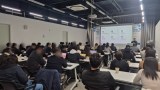
Busan AI education firm LANSQUARE trained tourism businesses on AI search on Nov. 20 at the second 2026 Busan Tourism Data Sharing Meeting. Sessions covered finding customer questions in tourism data and registering a ChatGPT business profile.
Tesser Atomics and Samsung Heavy form exclusive partnership on nuclear LNG carrier
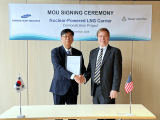
Samsung Heavy Industries and Tesser Atomics signed a memorandum on Nov. 19 to develop a nuclear-powered LNG carrier. The partners will jointly work on basic ship design and marine reactor technology for a demonstration project.
From pear sorting to village power: Jeonnam agency brings AI and energy tech to the field

The Jeonnam Information & Culture Industry Promotion Agency is supporting AI-based pear grading and village energy systems that use electric vehicle batteries, and the know-how is leading to overseas cooperation.
Startup 815 IR alliance's 41st championship names six top firms

Twelve startups that earned strong ratings across six IR sessions this year competed in the 41st Startup 815 IR Alliance Championship at the Pangyo Startup Zone, with six top companies selected for awards.
